Real Results
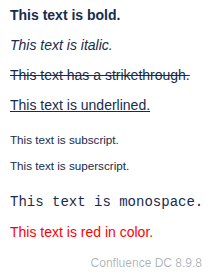
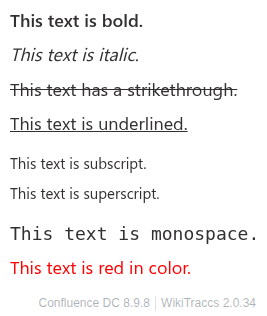
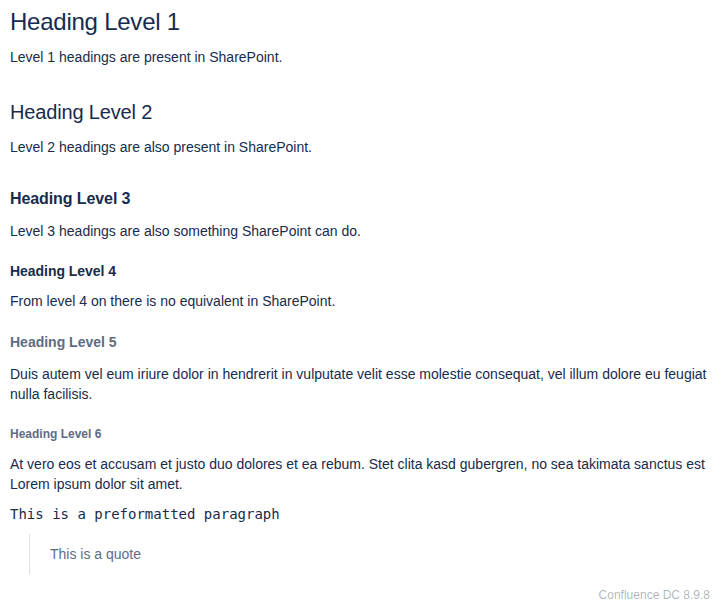
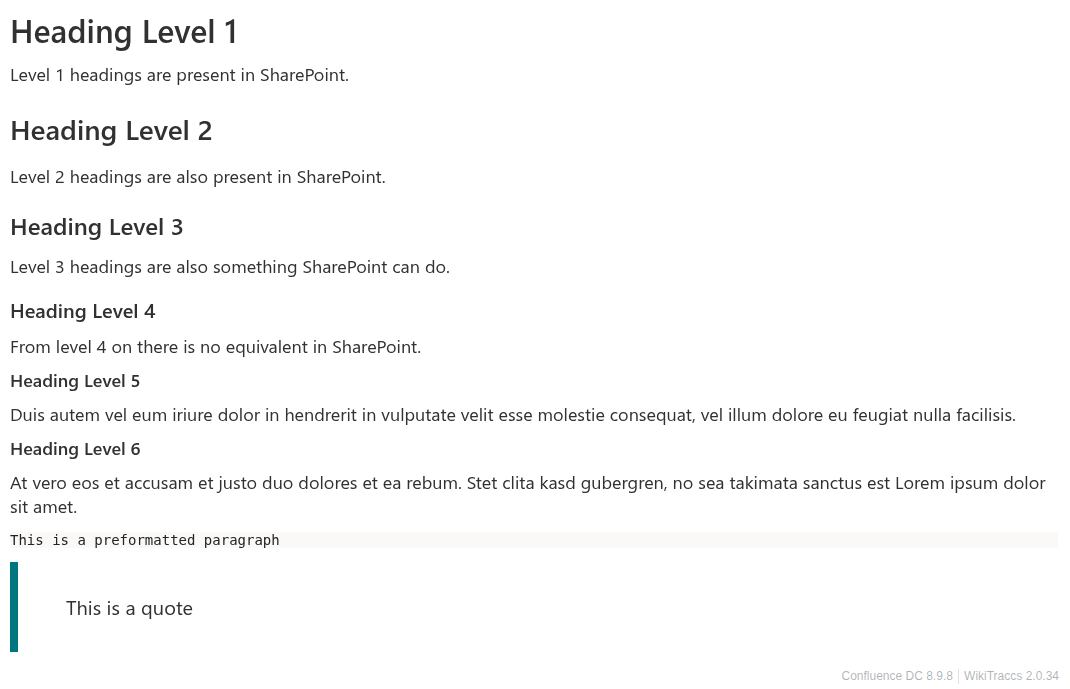
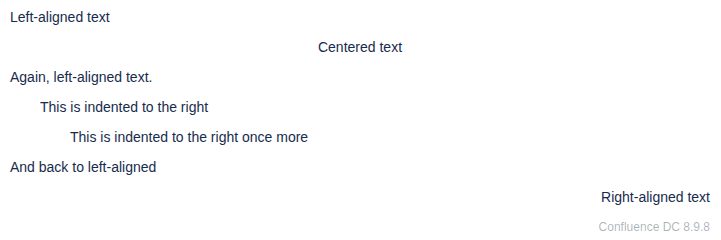
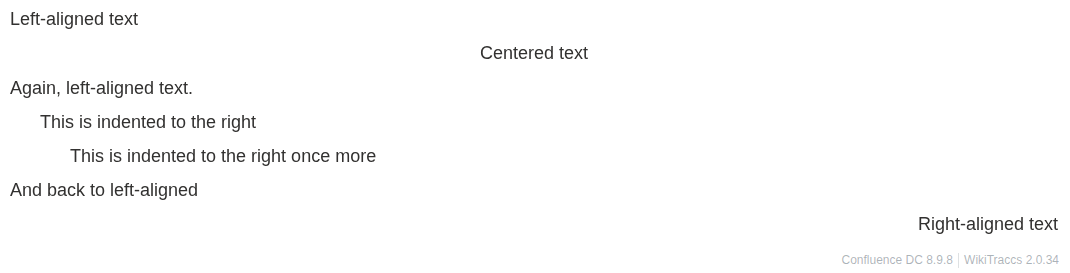
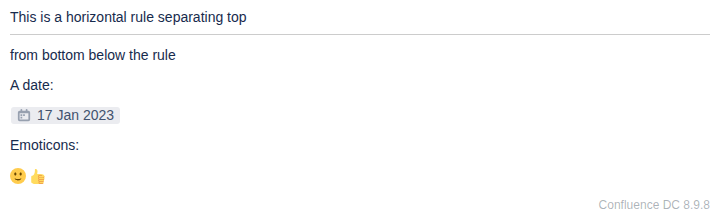
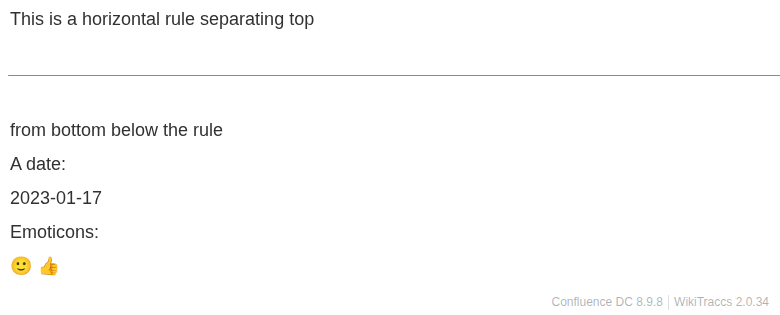
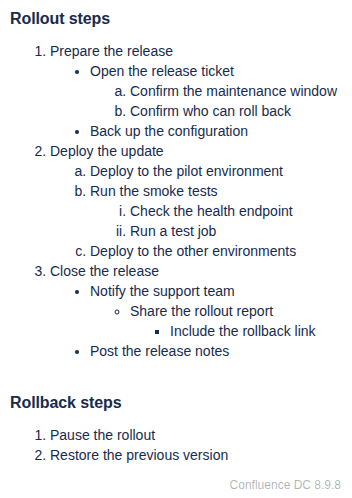
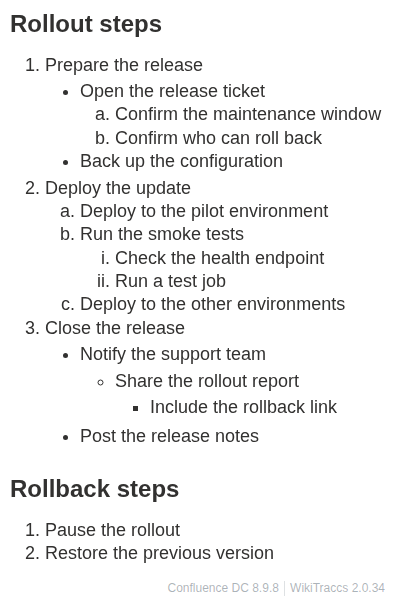
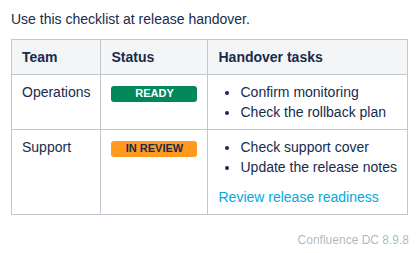
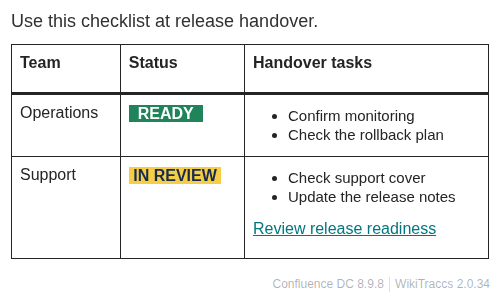
All content on this page has been generated by WikiTraccs. No tweaking, no cheating. If there is something missing or off you’ll see it here and there will often be an issue link.You’ll find pairs of images in the sections below. The first image shows a screenshot of a Confluence page. The second image shows how the content looks in SharePoint.
Formatting
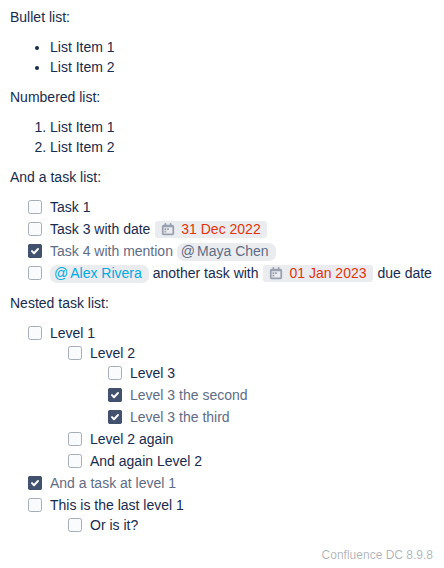
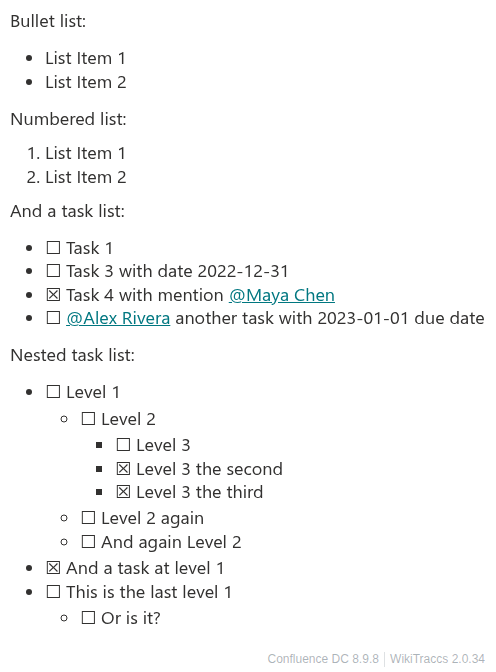
Nested Lists
Layouts
Standard Layouts
WikiTraccs transforms the Confluence layouts to the matching SharePoint layouts.
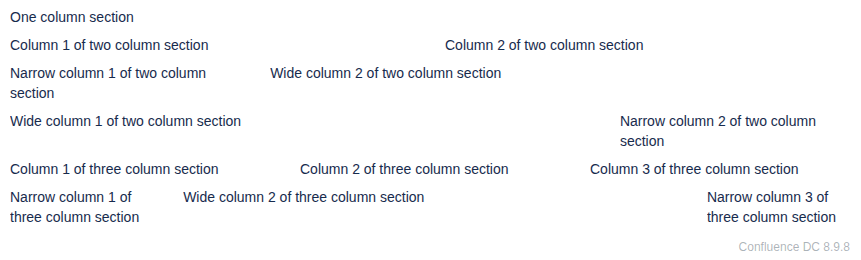
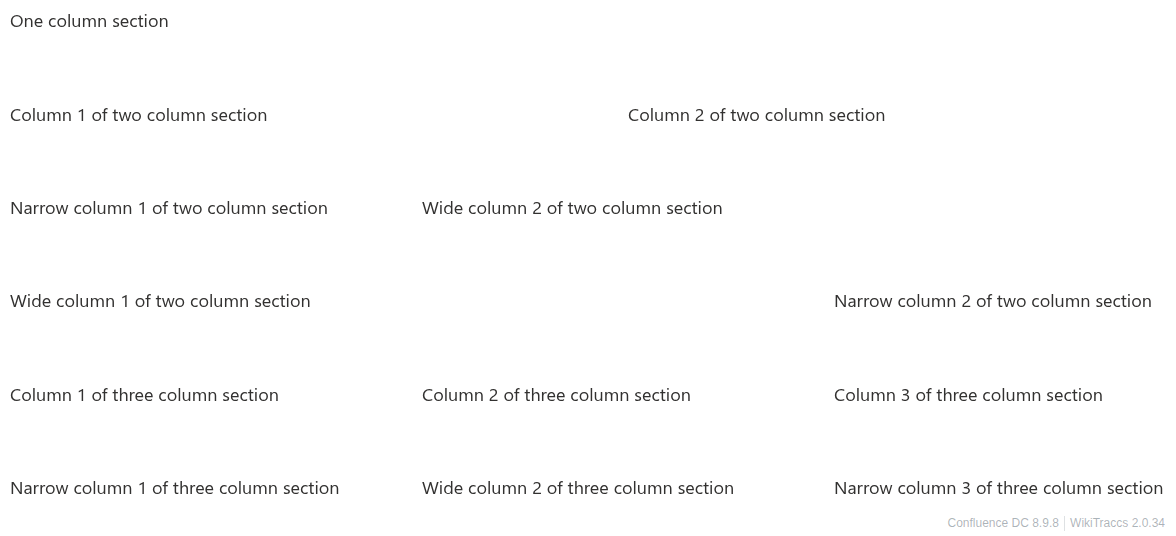
Here’s the edit mode of the two pages containing layouts:
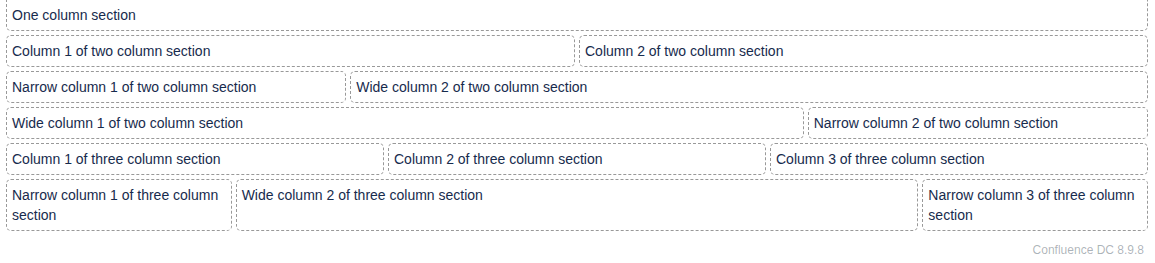
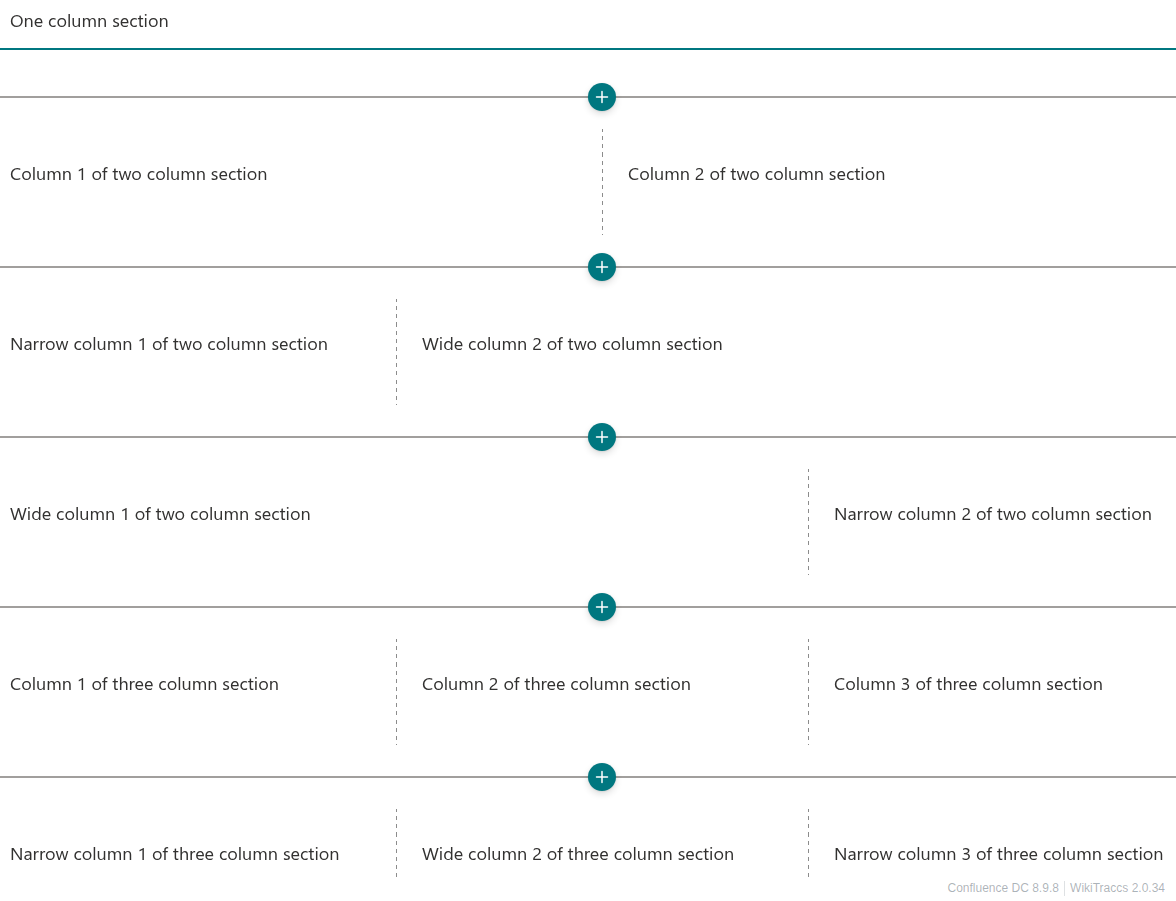
Notice how SharePoint only provides one three-column layout. WikiTraccs chooses this for both three-column Confluence layouts.
Sections and Columns
In Confluence users can create arbitrarily nested constructs of sections and columns. Even combinations that don’t make sense are sometimes allowed by Confluence or carried over by faulty migrations. WikiTraccs tries hard to make sense of what it finds.
WikiTraccs converts sections and columns to tables as there is no other equivalent in SharePoint.
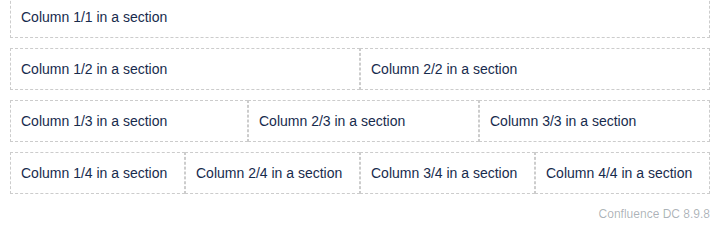
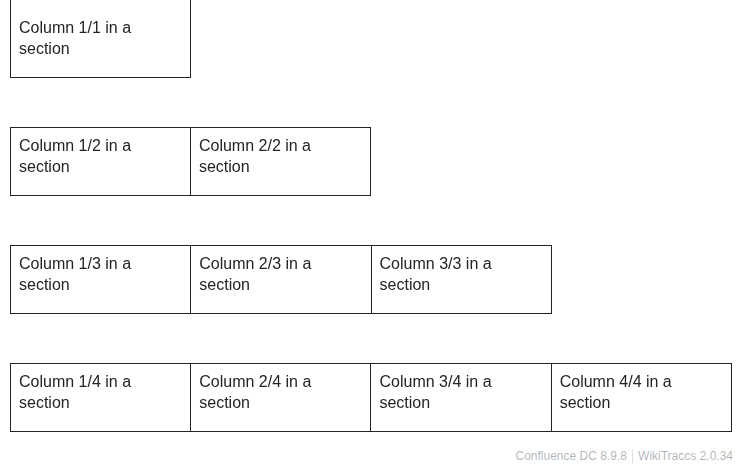
Note: It would be possible for WikiTraccs to convert the simplest section/column configurations to proper SharePoint sections: Issue Link.
Macros
Note: the following list is not complete. Have a look here for a complete overview: Known Confluence Macros
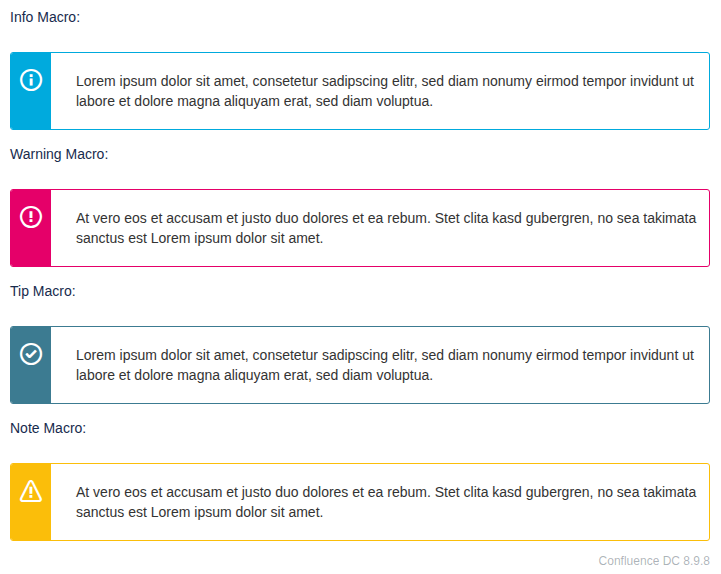
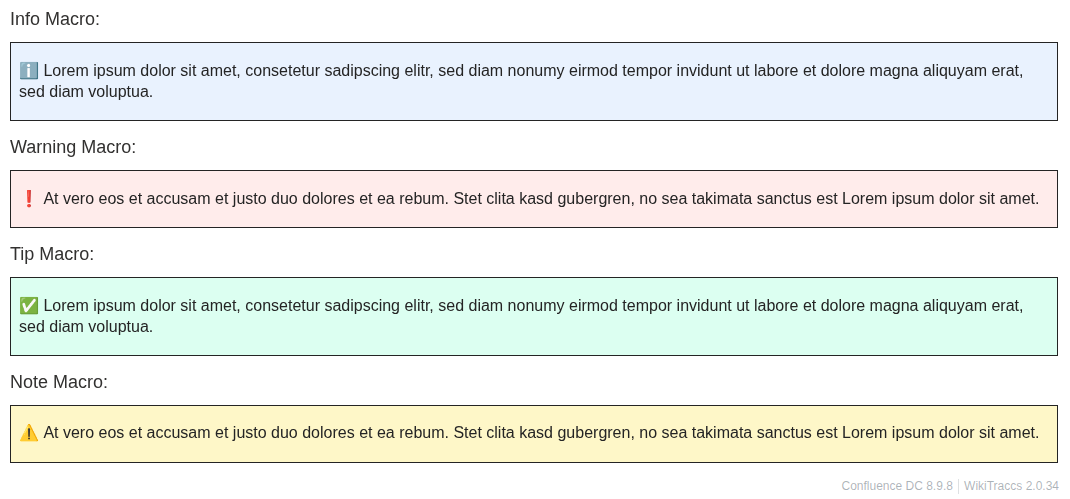
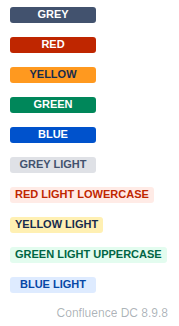
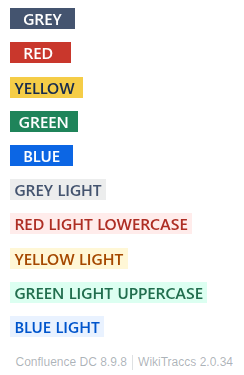
Note: WikiTraccs uses colored markers and emojis to indicate the type of note.
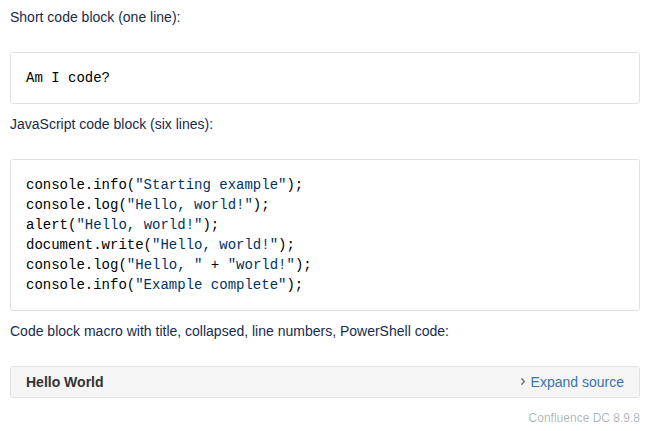
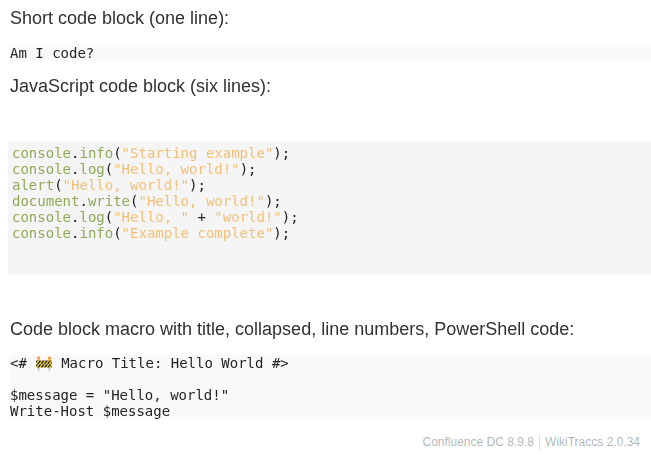
By default, WikiTraccs keeps code blocks of up to four lines as preformatted text. Longer blocks use a SharePoint Code Snippet web part.
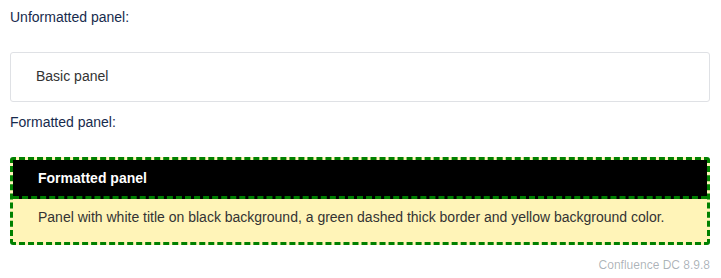
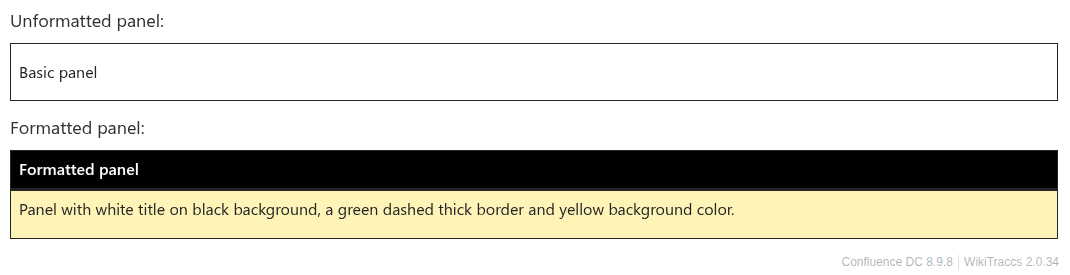
Note: SharePoint’s formatting is simpler than what Confluence offers.
Files, Images, Links
Images, External Images and Images with Links
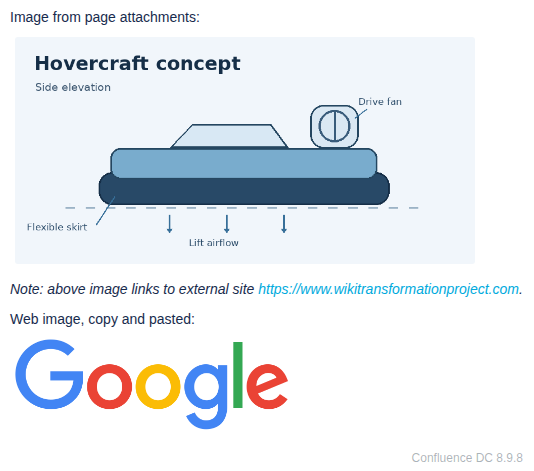
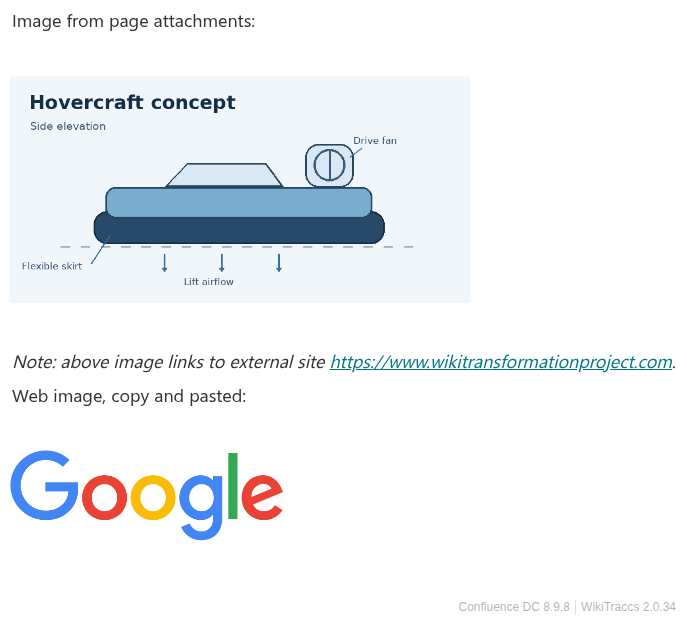
Note that a hyperlink has been configured for the first image. The user can click the image to navigate to the link. WikiTraccs migrates the link to SharePoint.
Also note that the Google logo on the Confluence page links to an external image. SharePoint does not allow linking to external images, due to security and privacy concerns. WikiTraccs downloads external images and then migrates them as page attachments.
Links to Content outside a Page
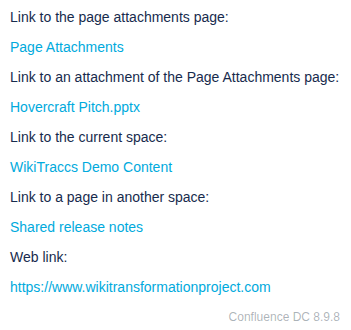
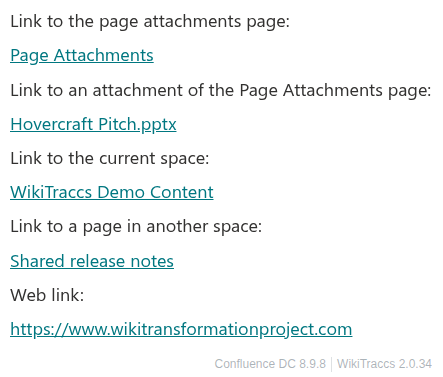
WikiTraccs changes regular Confluence page links so that they point to the new SharePoint page location.
WikiTraccs will also transform links to other spaces. To do this it needs to know which space maps to which SharePoint site - this is done via the Space Inventory list.
Furthermore, plain text links (“hard links”) are migrated as-is, unless they link to a Confluence page, attachment, or space. WikiTraccs detects those automatically.
Page Attachments
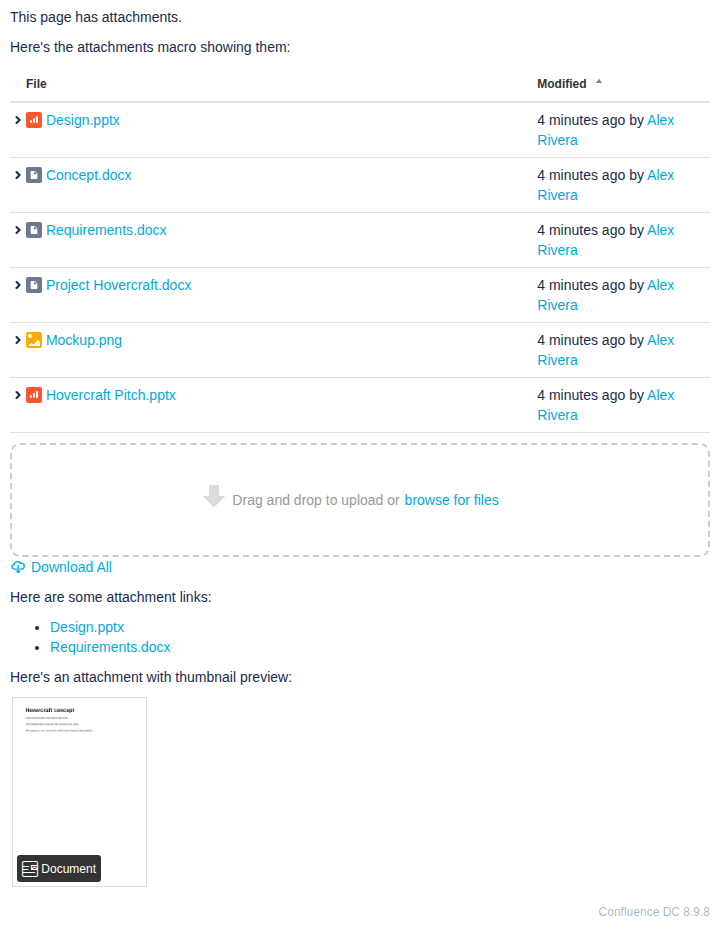
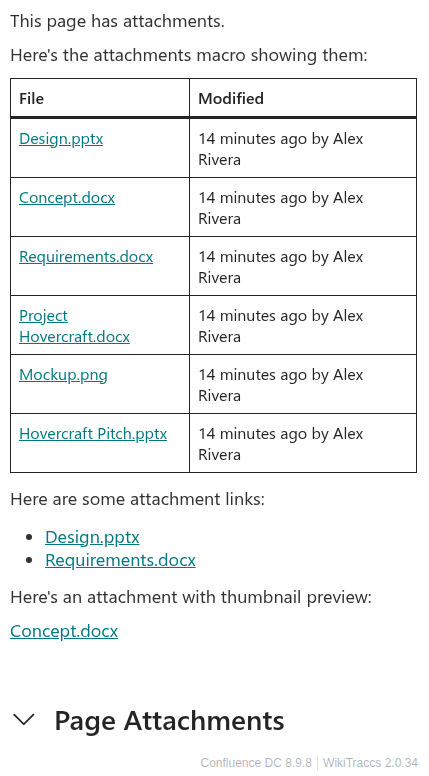
There is more information available in this blog post: New attachments macro transformation
Users and Groups
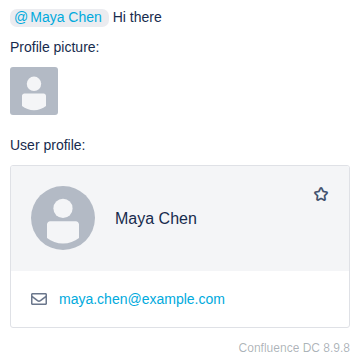
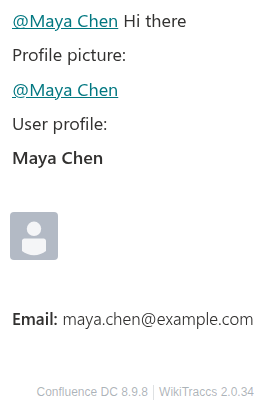
In SharePoint, WikiTraccs creates “mention texts” like in Confluence. Those link to the SharePoint people search where the search field is pre-populated with the mentioned user’s email address.
People profile and image macros are converted to the “mention text” format as well.
Note: When migrating, WikiTraccs needs a certain permission level to access users’ email addresses.
Tables
In Confluence users can do a lot with tables. SharePoint Online evolved a lot over the last years with regard what it can do: merged cells, cell background colors, and nested tables all survive the migration.
Simple Tables
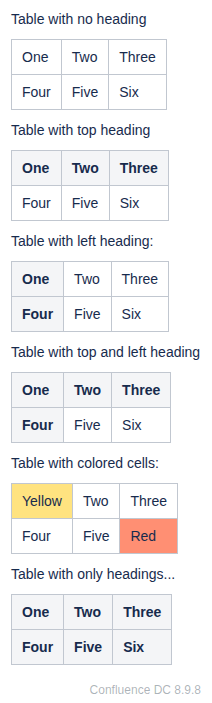
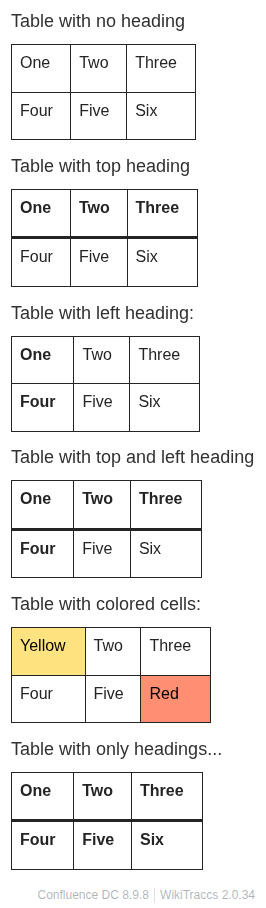
Table Widths
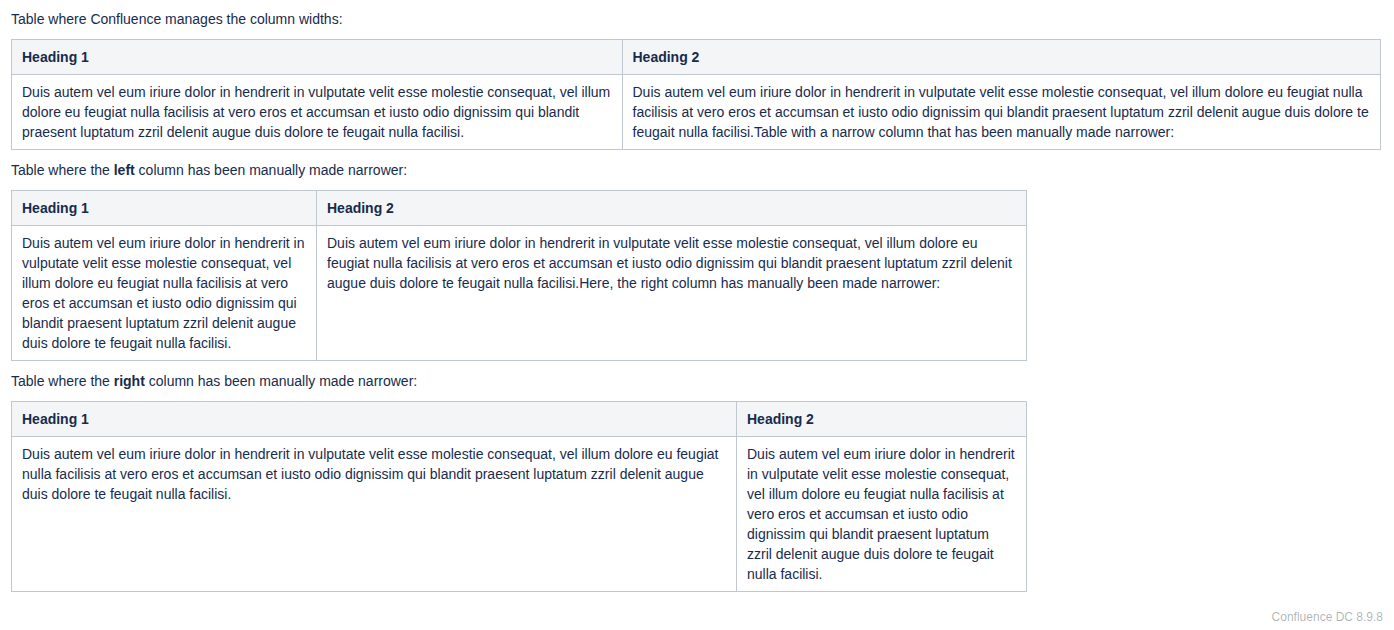
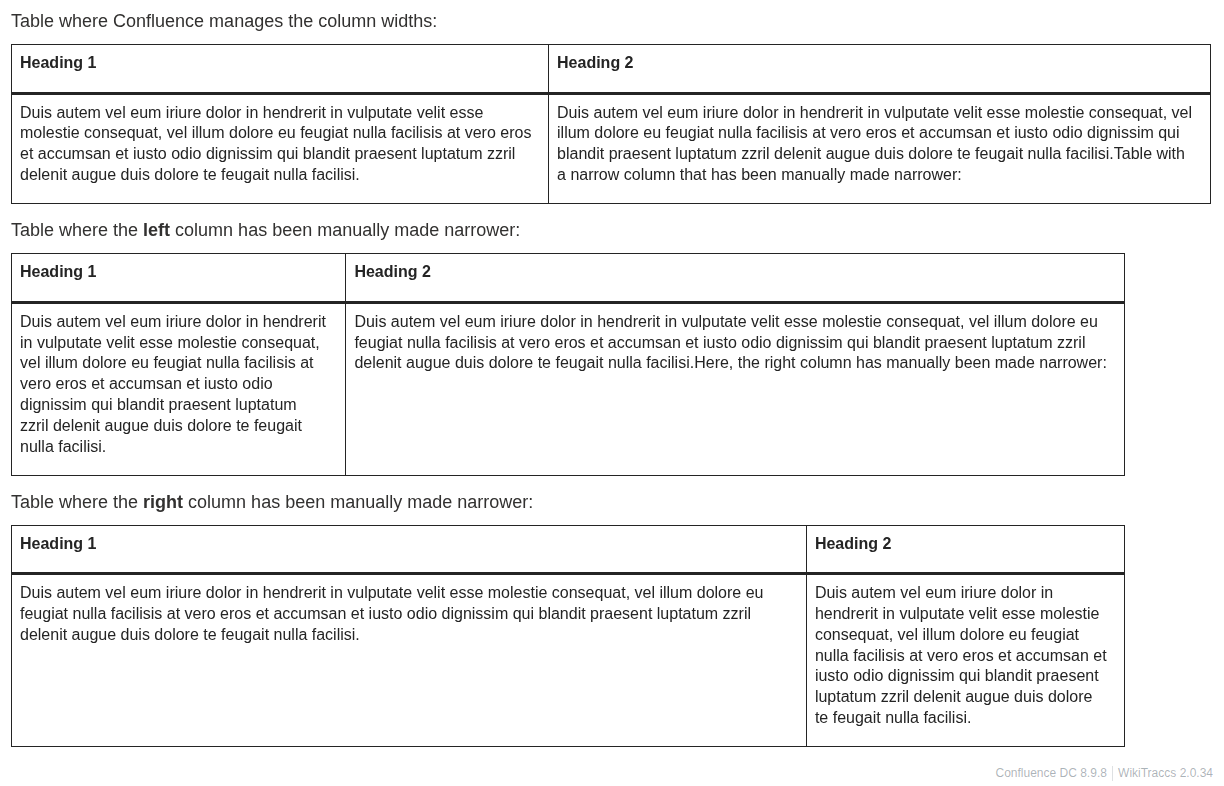
WikiTraccs normalizes Confluence tables and the result can be seen below:
Advanced Tables
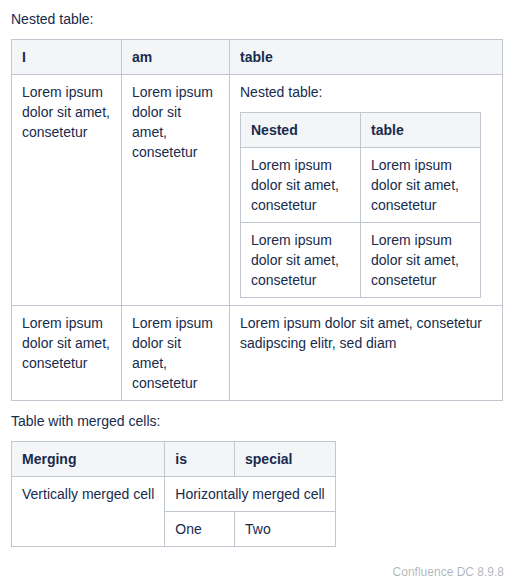
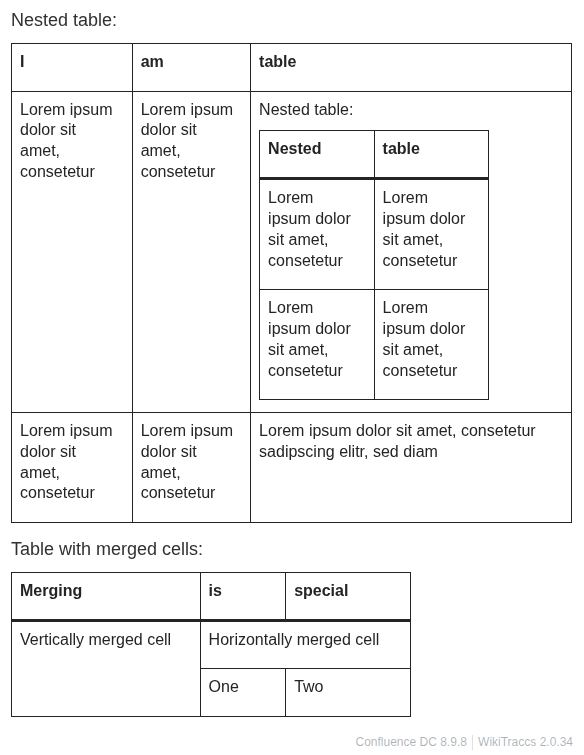
Larger Tables
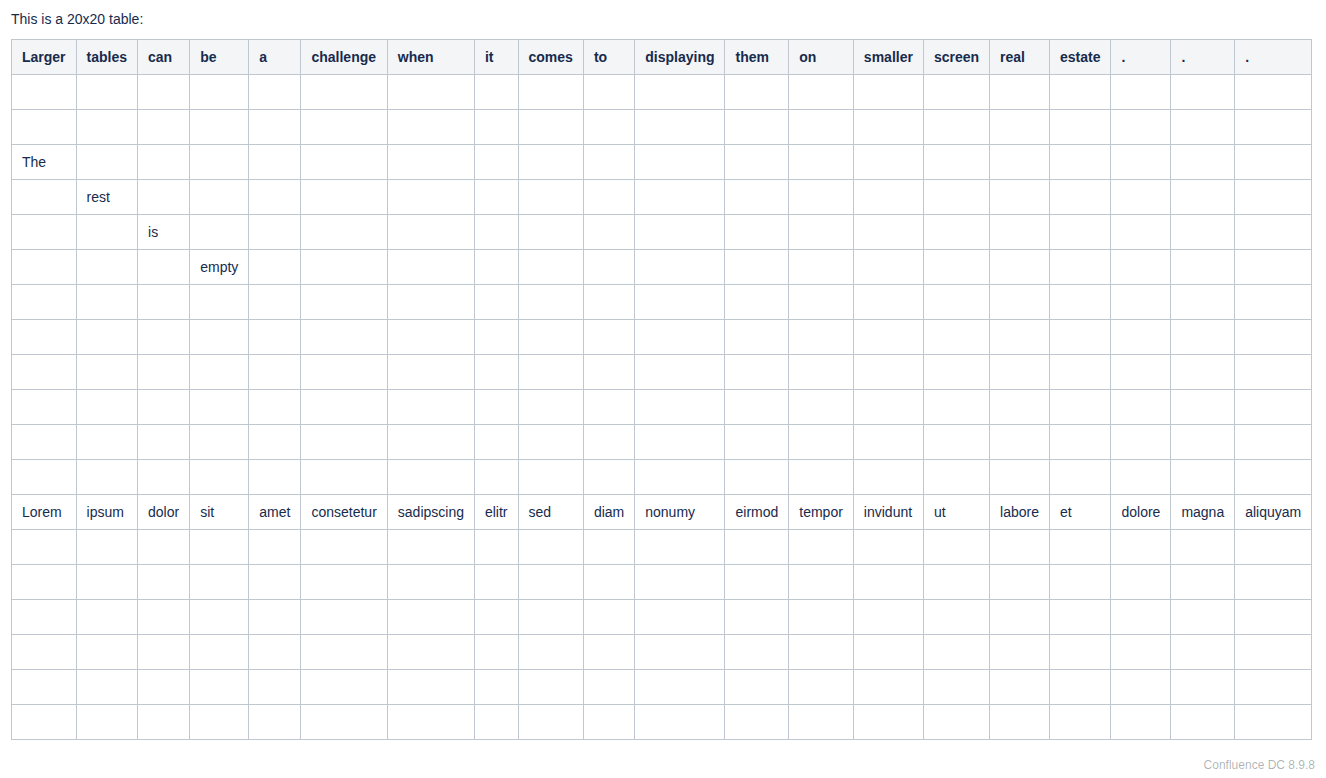
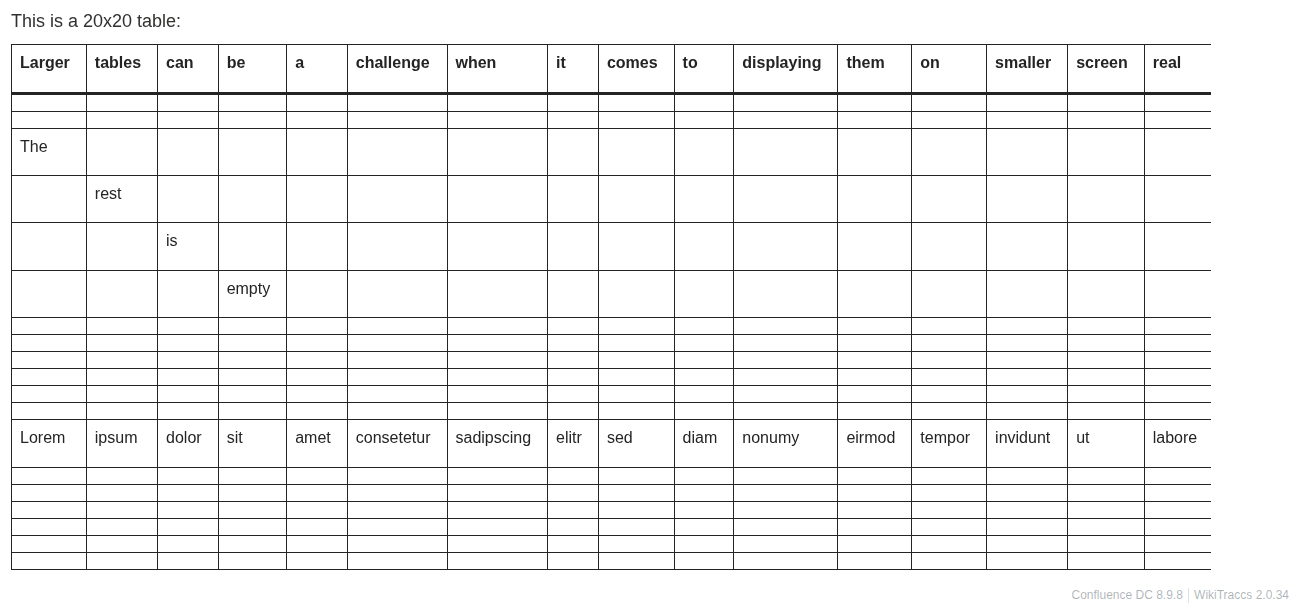
Note: Wide tables are usually a challenge for SharePoint because SharePoint pages are narrow compared to Confluence. SharePoint shows a scroll bar if the table is wider than the page.
Numbered rows and merged headings
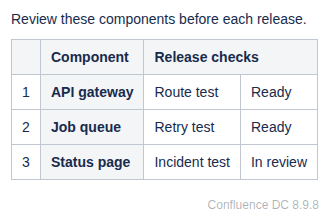
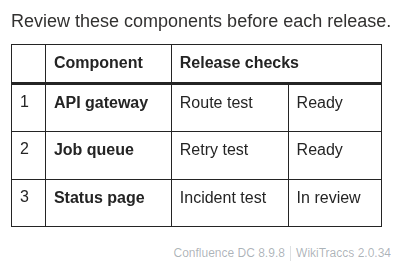
Rich content in table cells
Standards Note
WikiTraccs aims to create SharePoint pages that look and behave like pages a user could have created in the browser editor.
Merged cells and cell background colors are now supported natively in the SharePoint browser editor. Nested tables are not - the toolbar still doesn’t offer a way to create them - but the SharePoint Text web part stores and renders them correctly. WikiTraccs creates nested tables by default via the Use non-standard table transformation Gray Setting; turn the setting off to fall back to plain, denested tables.
App macro samples
Balsamiq
Balsamiq Wireframes for Confluence
App version 4.2.74, Atlassian Marketplace
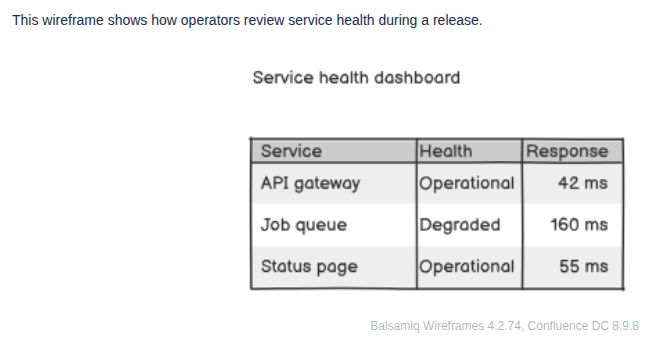
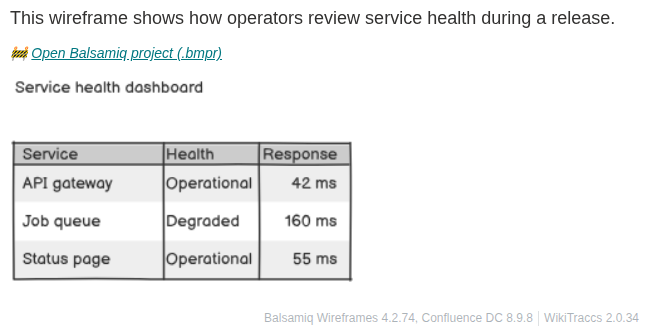
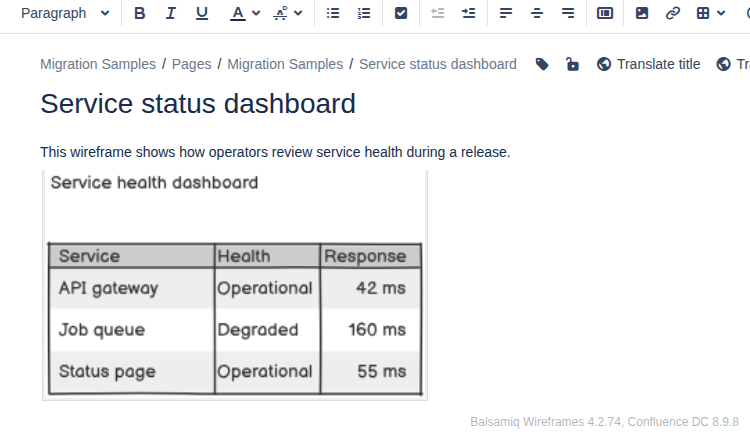
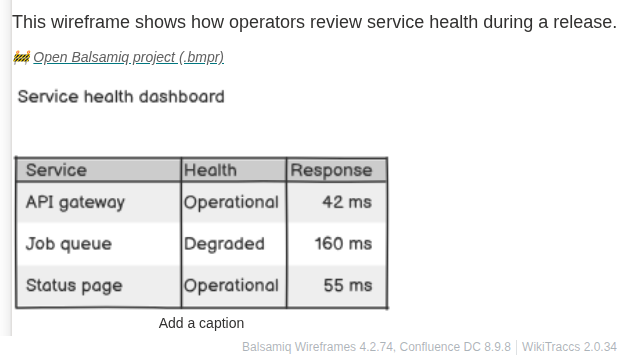
Wireframe macro
SharePoint shows the wireframe as an image. WikiTraccs migrates the editable Balsamiq project file separately.
Internal name wireframe, tested on Confluence Data Center 8.9.8
Appfire
Advanced Tables for Confluence
App version 8.8.15, Atlassian Marketplace
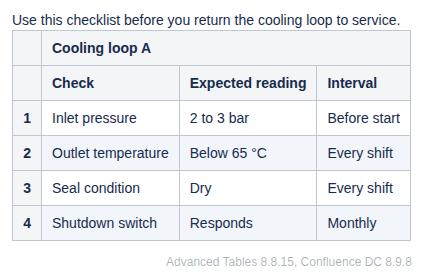
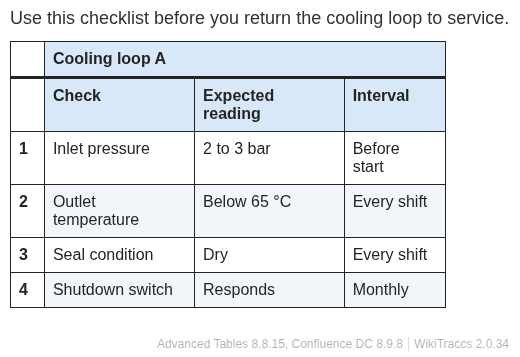
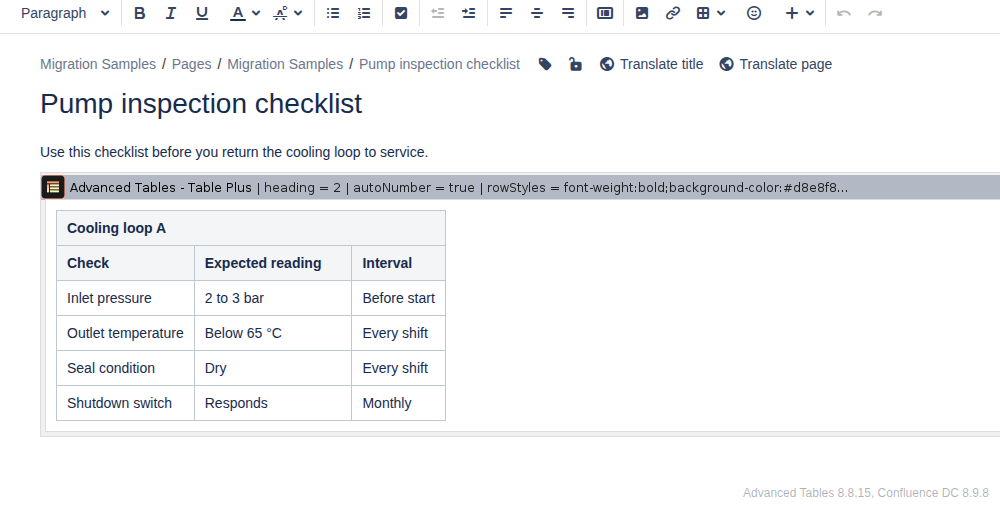
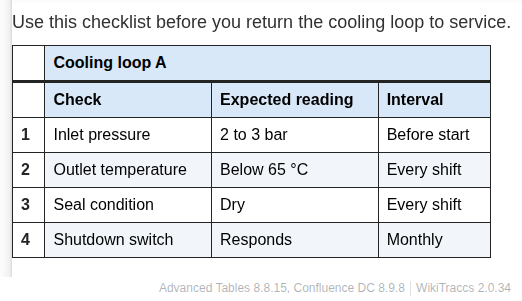
Table Plus
Internal name table-plus, tested on Confluence Data Center 8.9.8
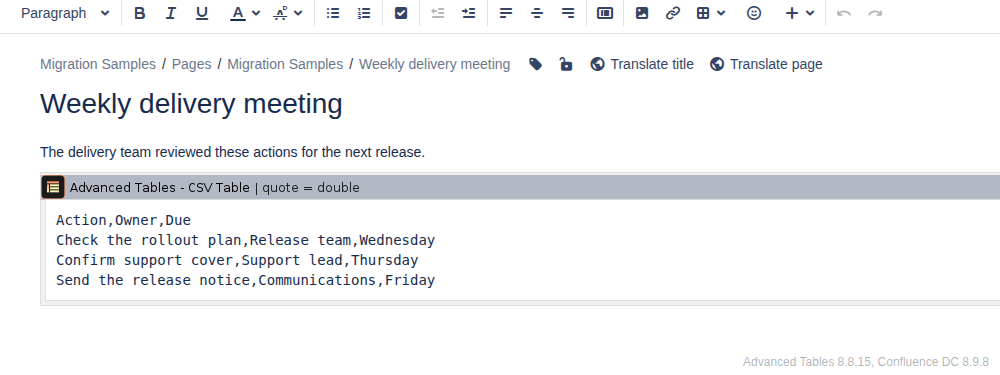
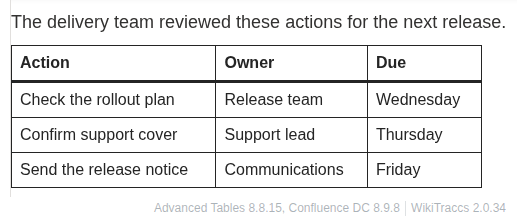
CSV Table
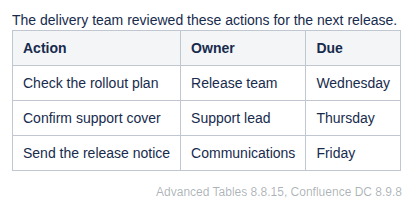
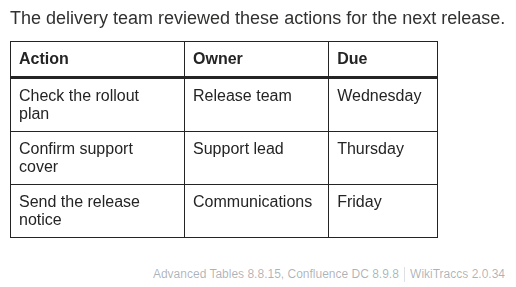
Inline CSV
Internal name csv, tested on Confluence Data Center 8.9.8
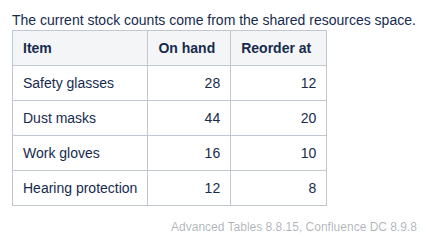
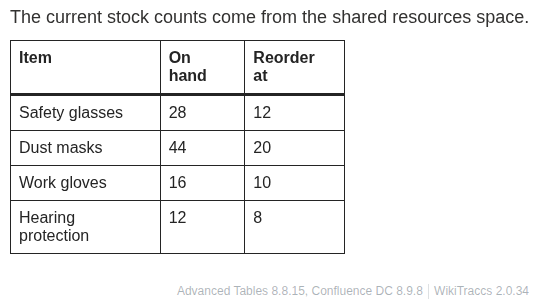
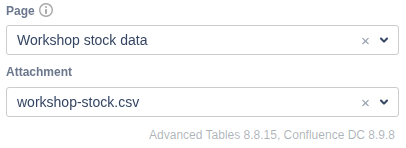
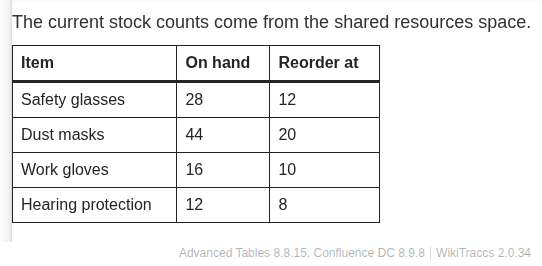
CSV attachment from another space
Internal name csv, tested on Confluence Data Center 8.9.8
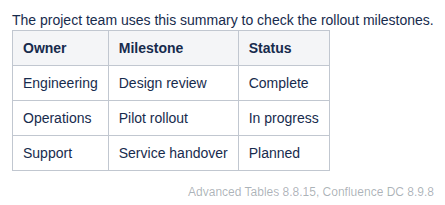
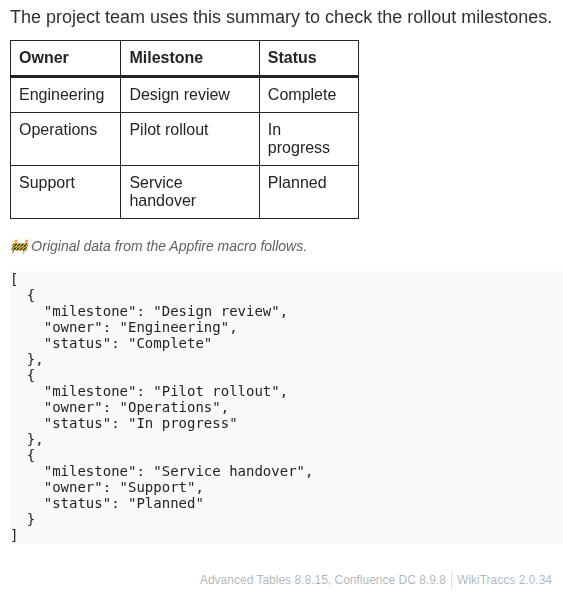
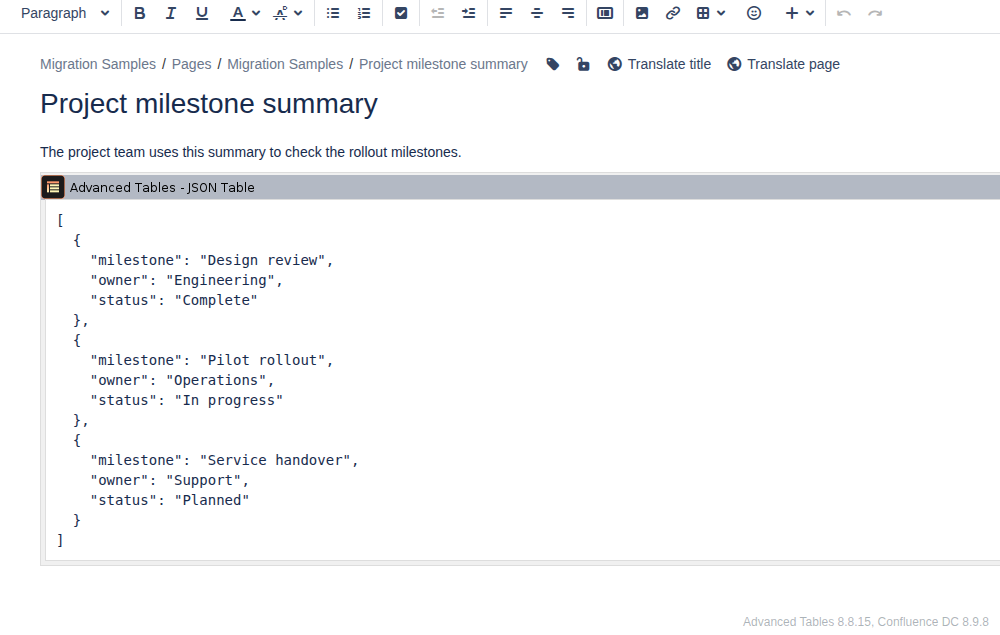
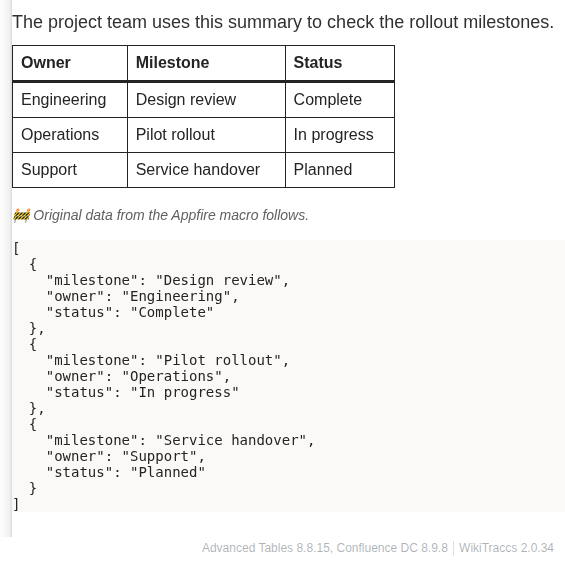
JSON Table
Internal name json-table, tested on Confluence Data Center 8.9.8
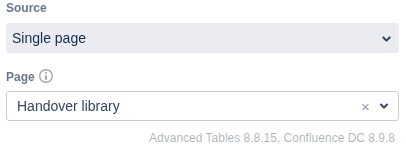
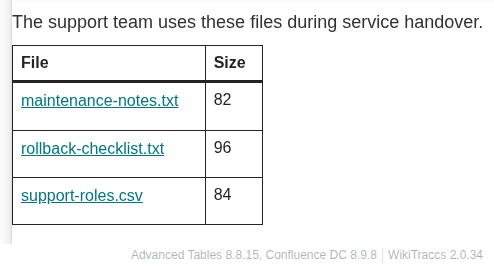
Attachment Table
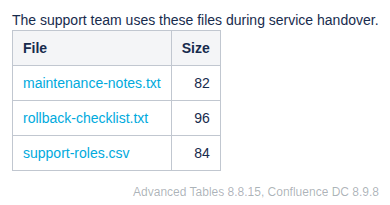
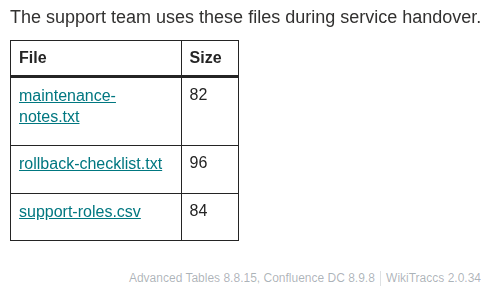
Internal name attachment-table, tested on Confluence Data Center 8.9.8
Excel for Confluence
App version 7.4.6 (local sandbox build), Atlassian Marketplace
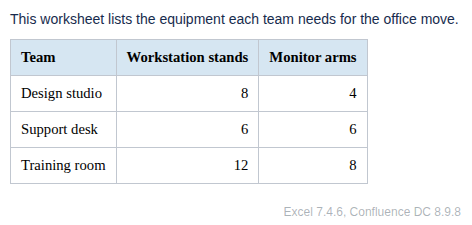
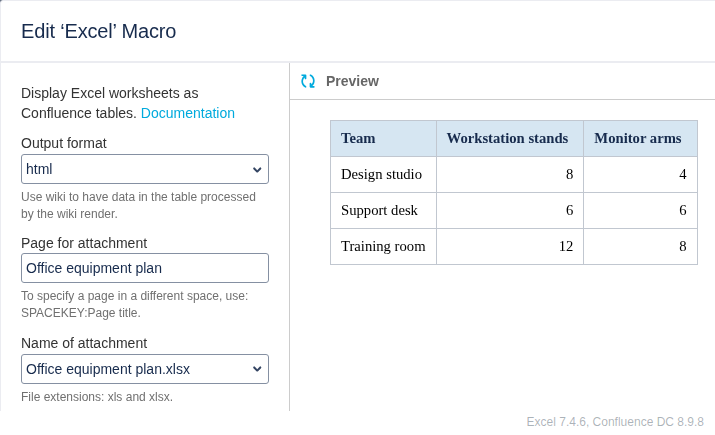
Excel macro
Internal name excel, tested on Confluence Data Center 8.9.8


LaTeX Math
App version 5.1.17 (local sandbox build), Atlassian Marketplace
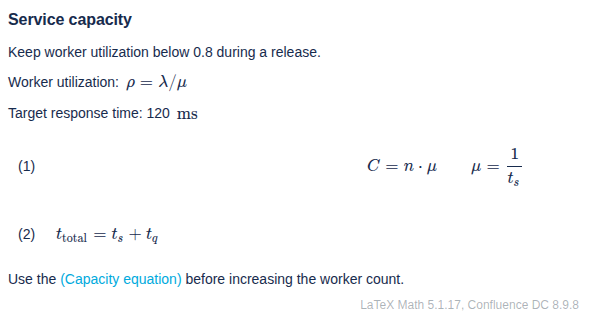
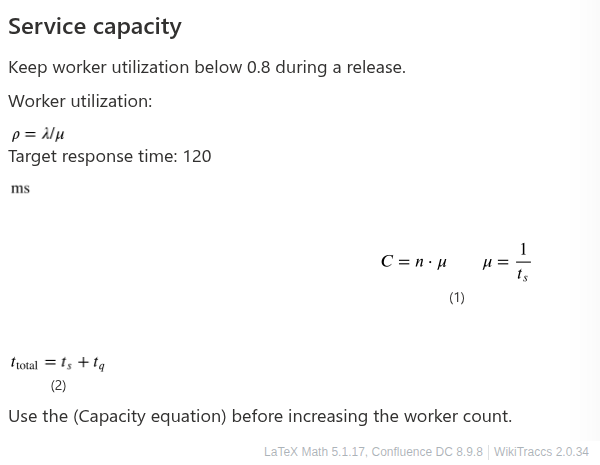
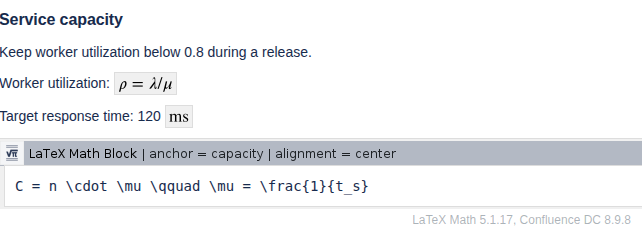
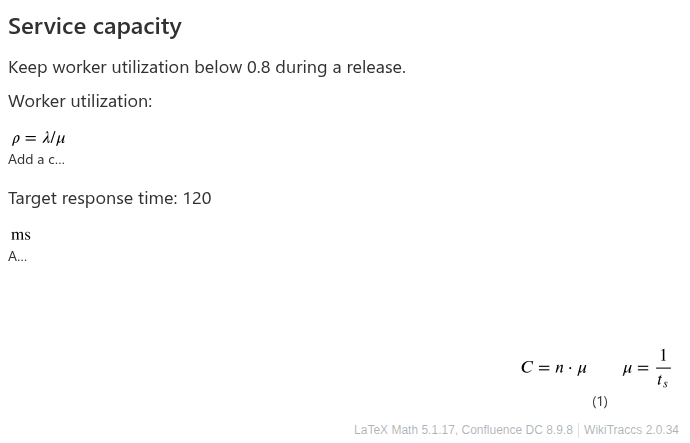
Math Inline, Unit, and Math Block macros
WikiTraccs stores the rendered formulas as PNG files and shows them as images on the SharePoint page.
Internal name mathinline, unit, mathblock, tested on Confluence Data Center 8.9.8
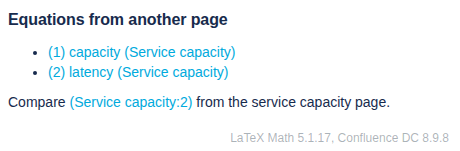
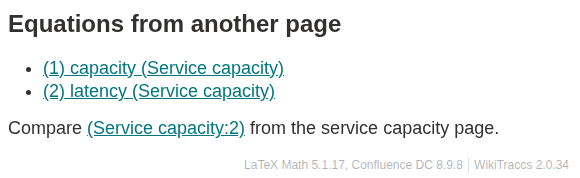
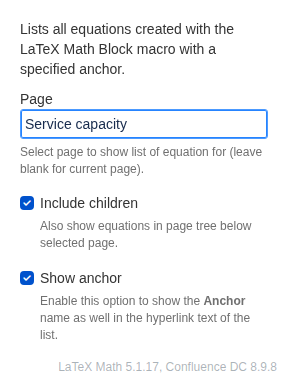
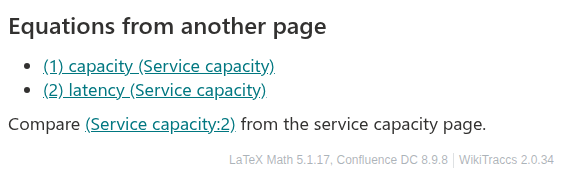
Math Block Reference and Math Block Table macros
Internal name mathblock-ref, mathblock-table, tested on Confluence Data Center 8.9.8
The Plugin People
LaTeX and MathJax
App version 2.2.2 (local sandbox build), Atlassian Marketplace
MathJax Inline, MathJax Block, and LaTeX macros
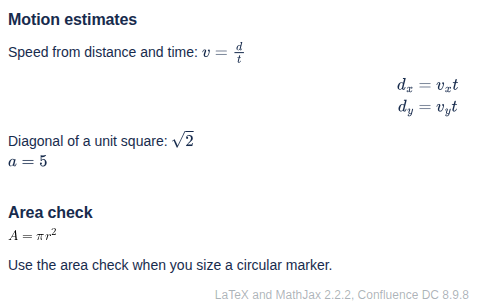
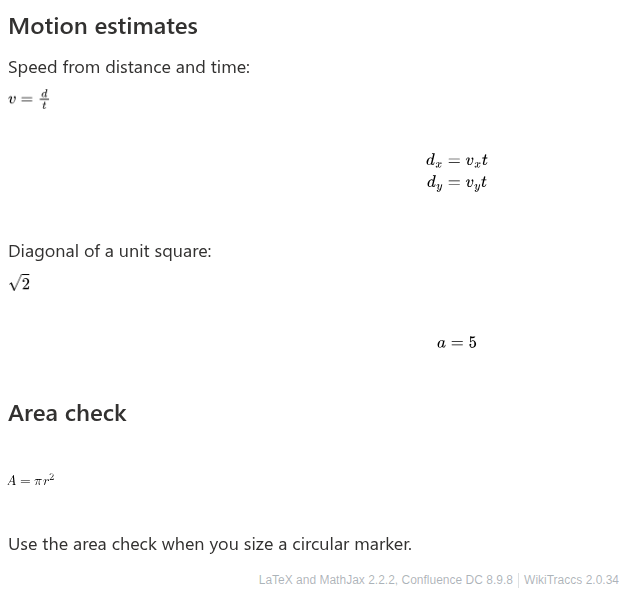
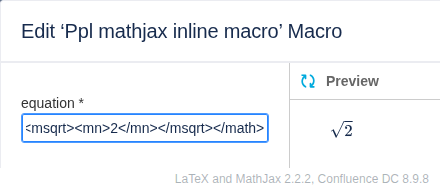
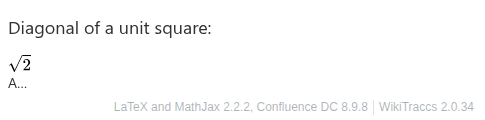
SharePoint shows LaTeX and MathML formulas as images. WikiTraccs stores the PNG files with the page.
Internal name ppl mathjax inline macro, ppl mathjax block macro, latex, tested on Confluence Data Center 8.9.8